
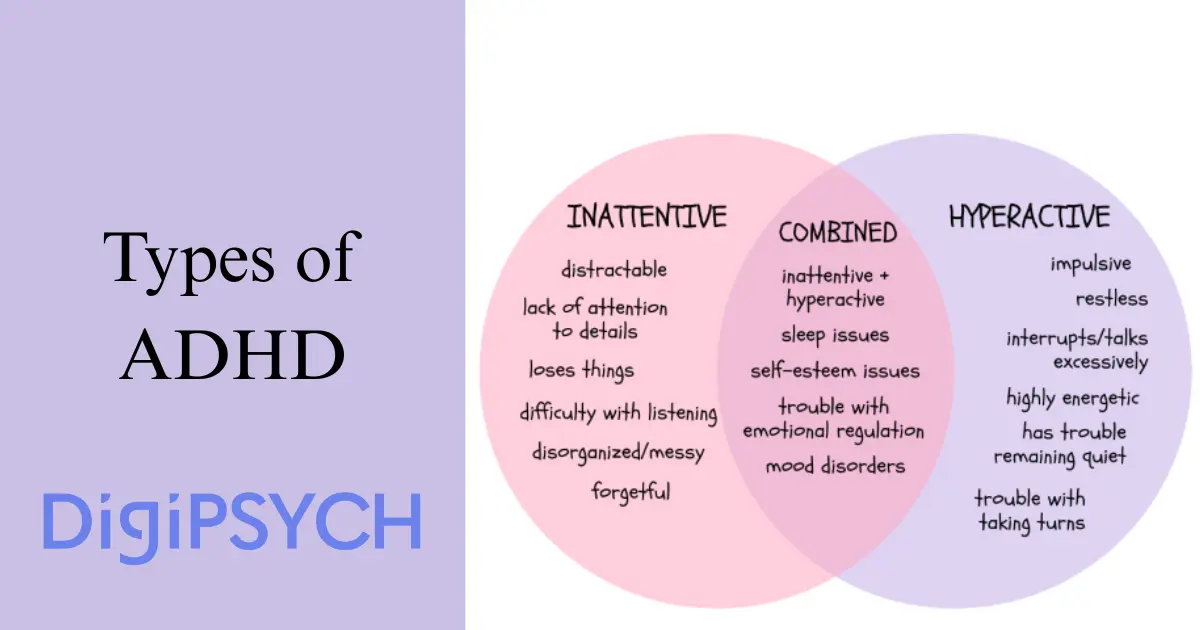
Attention Deficit Hyperactivity Disorder (ADHD) in adults is more complex than the classic picture of restlessness and distractibility. Many adults experience subtle, often overlooked symptoms that impact work, relationships, and emotional health. Beyond the standard categories, Inattentive, Hyperactive-Impulsive, and Combined, emerging research identifies seven distinct ADHD patterns in adults.
These patterns explain variations in focus, mood regulation, impulsivity, and cognitive processing, helping professionals tailor assessments and treatment plans.
Understanding these types can improve diagnostic accuracy and guide interventions for more effective management of adult ADHD.
If you suspect you might have one of these ADHD subtypes, our dedicated ADHD treatment services can help you receive a personalized assessment.
Classic ADHD (ADD)
Classic ADHD is the subtype most commonly associated with hyperactivity, impulsivity, and distractibility. Adults with this type often struggle with maintaining focus, organizing tasks, and controlling restlessness. They may feel mentally “scattered,” jump between projects, and have difficulty following through on commitments.
Key features:
- Hyperactivity and restlessness
- Difficulty organizing daily tasks
- Impulsivity in decisions or conversations
- Chronic lateness or missed deadlines
Treatment considerations: Dopamine-boosting medications, structured routines, and behavioral therapy can improve focus and reduce impulsive behaviors. Classic ADHD often overlaps with anxiety, so addressing comorbid conditions is essential.
Example: A project manager constantly juggling tasks but missing deadlines may have classic ADHD, particularly if impulsivity affects decision-making.
Research shows that ADHD symptoms persist into adulthood, affecting daily functioning, relationships, and work performance, but effective treatment can significantly improve quality of life.
Inattentive ADHD
Inattentive ADHD presents subtly, often without hyperactive symptoms. Adults appear dreamy, forgetful, or easily distracted. They may struggle with planning, completing projects, and maintaining motivation.
Key features:
- Chronic procrastination is often a symptom of classic ADD.
- Low energy or initiative can be a common symptom of limbic ADD.
- Difficulty prioritizing tasks
- Daydreaming or mental drifting
Treatment considerations: Cognitive-behavioral strategies, structured task management, and effective treatment options like stimulant or non-stimulant medications can help improve attention and executive functioning.
Real-world example: A freelance writer missing deadlines not because of laziness but due to persistent distractibility may have predominantly inattentive ADHD.
Over-Focused ADHD
Over-focused ADHD is characterized by rigidity in thought patterns and difficulty shifting attention. Adults may become “stuck” on a negative thought, a task, or an argument, leading to frustration and stress.
Key features:
- Hyper-focus on unproductive tasks
- Difficulty transitioning between activities
- Rigidity in thinking or planning
- Tendency to ruminate
Treatment considerations: Mindfulness training, cognitive restructuring, and executive function coaching can reduce mental rigidity. Medication may help modulate focus patterns.
Example: An accountant obsessively reviewing minor errors, unable to move to the next task, exemplifies over-focused ADHD.
Temporal Lobe ADHD
Temporal Lobe ADHD is linked to emotional instability, irritability, and impulsivity. Adults may display quick temper, mood swings, or heightened emotional reactions to minor stressors. Memory lapses or mild paranoia may also occur.
Key features:
- Rapid mood fluctuations
- Impulsivity in anger or decision-making
- Occasional memory challenges
- Heightened sensitivity to criticism may be a unique challenge for individuals with ADHD.
Treatment considerations: Emotional regulation therapy, mood stabilizers, and structured stress management techniques can reduce reactive behaviors associated with predominantly hyperactive-impulsive ADHD. Understanding triggers is key to intervention.
Real-world example: A teacher who reacts strongly to student feedback, later feeling guilt or confusion, may have temporal lobe ADHD.
Limbic ADHD
Limbic ADHD often overlaps with depressive symptoms. Adults experience chronic sadness, low energy, and a negative outlook on life. Motivation is consistently low, and daily functioning may feel exhausting.
Key features:
- Persistent low mood
- Chronic fatigue or lack of motivation
- Negative self-perception
- Difficulty sustaining attention
Treatment considerations: Antidepressant medications, behavioral activation, and structured routines can help improve mood and executive functioning. Exercise and social support also play a significant role.
Example: A corporate employee unable to complete tasks due to persistent fatigue and negative self-talk may be experiencing limbic ADHD.
Ring of Fire ADHD
Ring of Fire ADHD is marked by over-activation of the nervous system, leading to extreme sensitivity, anxiety, and racing thoughts. Adults may become easily overwhelmed by stimuli and struggle with emotional regulation.
Key features:
- Sensory overload and irritability
- Rapid thought processes and scattered focus
- Emotional volatility
- Heightened anxiety
Treatment considerations: Mind-body interventions, stress management techniques, and calming strategies are crucial for individuals with anxious ADD. Medications targeting attention and mood stabilization may also be beneficial.
For ADHD types like Ring of Fire or Anxious ADHD, our specialized anxiety treatments can provide additional support
Real-world example: A musician experiencing intense anxiety and racing thoughts during performances, combined with sensory hypersensitivity, may fit the ring of fire ADHD profile.
Anxious ADHD
Anxious ADHD combines typical inattentive symptoms with chronic worry and tension. Adults may feel mentally “foggy,” avoid tasks due to fear of failure, and experience physical manifestations of anxiety such as muscle tightness or sleep difficulties.
Key features:
- Persistent worry and tension
- Low focus and disorganization
- Procrastination linked to anxiety can be exacerbated by inattention, a common symptom of ADHD.
- Physical symptoms of stress
Treatment considerations: Cognitive-behavioral therapy for anxiety, mindfulness practices, and selective pharmacological interventions can alleviate both attention deficits and anxiety symptoms.
Example: A software developer constantly second-guessing code quality, unable to focus due to worry, may be living with anxious ADHD.
Comparing the 7 Types of ADHD in Adults
| ADHD Type | Core Traits | Common Challenges | Typical Interventions |
| Classic ADHD | Hyperactivity and distractibility are key characteristics of ADHD that can lead to unique challenges in academic settings. | Task completion, impulsivity | Dopamine therapy and behavioral therapy are important components of ADHD treatment. |
| Inattentive ADHD | Daydreaming, low motivation | Organization and planning are crucial skills for those managing symptoms of ADHD, especially when considering the role of the prefrontal cortex. | CBT, structured routines |
| Over-Focused ADHD | Rigidity, hyper-focus | Transitioning, rumination | Mindfulness, cognitive restructuring |
| Temporal Lobe ADHD | Mood swings, irritability | Emotional regulation | Therapy, mood stabilizers |
| Limbic ADHD | Low energy and chronic sadness can be symptoms of inattentive ADD. | Motivation, focus | Antidepressants, behavioral activation |
| Ring of Fire ADHD | Overstimulation, racing thoughts | Sensory overload, anxiety | Stress management, calming techniques |
| Anxious ADHD | Worry, tension, procrastination | Mental fog, stress | CBT, mindfulness, pharmacotherapy |
Pro Tips for Managing ADHD in Adults
- Track symptoms consistently: Journals or digital apps can help identify patterns related to attention deficit disorder.
- Structured routines are essential for managing symptoms of ADHD effectively. Consistent schedules reduce cognitive load and help mitigate the effects of attention deficit disorder.
- Task segmentation: Breaking large tasks into smaller steps prevents overwhelm.
- Mindfulness and relaxation: Practices like meditation reduce over-focus and emotional reactivity.
- Professional support: Psychologists and psychiatrists can tailor interventions based on ADHD subtype, including inattentive ADD and predominantly hyperactive-impulsive.
Adult ADHD often overlaps with other mental health challenges; learn more about our comprehensive adult mental health programs.
Use Cases: How ADHD Subtypes Affect Daily Life
- Classic ADHD is one of the seven types and is characterized by impulsivity and hyperactivity. Struggles with multitasking at work; forgets meetings or deadlines, are common symptoms of ADHD.
- Inattentive ADHD, which is one of the seven types of ADHD, can manifest in various ways. Misses project milestones due to mental drifting.
- Over-Focused ADHD: Obsessively edits reports, unable to finalize tasks.
- Temporal Lobe ADHD: Frequent interpersonal conflicts due to quick temper.
- Limbic ADHD: Chronic fatigue reduces participation in social and professional activities.
- Ring of Fire ADHD: Sensory sensitivity causes workplace avoidance or irritability.
- Anxious ADHD: Anxiety prevents task initiation or completion.
Find a Digipsych location near you to access ADHD evaluations and mental health support in your area.
Final words
The understanding of adult ADHD is evolving. Recognizing these seven distinct subtypes allows clinicians and individuals to approach treatment with precision, targeting specific behavioral, cognitive, and emotional challenges. Adults struggling with focus, impulsivity, mood swings, or chronic anxiety may find clarity and improved outcomes by exploring which ADHD subtype aligns with their symptoms.
You can schedule an appointment with our specialists to discuss which ADHD type may be affecting you.
FAQs
What are the seven types of ADHD in adults, and how do they differ in symptoms?
They include Classic, Inattentive, Over-Focused, Temporal Lobe, Limbic, Ring of Fire ADD, and Anxious ADHD, which are the seven types of ADHD. Each type reflects distinct behavioral, cognitive, and emotional patterns.
Can adults have more than one ADHD type?
Yes, symptom overlap is common, and adults may present characteristics from multiple types.
How is ADHD diagnosed in adults, particularly when considering the seven types?
Diagnosis involves clinical interviews, standardized rating scales, and assessment of life-long symptoms. Comorbid conditions such as anxiety or depression are also evaluated.
Is the 7-type model universally accepted?
Mainstream psychiatry primarily uses Inattentive, Hyperactive-Impulsive, and Combined types, though the 7-type framework helps in understanding nuanced symptom presentations.
Are medications effective for all ADHD types?
Effectiveness varies. Classic ADHD responds well to stimulant therapy, while other types may benefit from a combination of medications, therapy, and lifestyle strategies.