
Feeling empty inside often signals a need for emotional attention, stemming from things like burnout, unresolved grief, a lack of purpose, or feeling disconnected from others. It’s an important cue that one of your deeper emotional needs isn’t being met.
The feeling of emptiness is pressing over your chest?
You’re uncertain whether it’s sadness, depression, or just natural.
The truth is emptiness, maybe a little bit of everything.
First, let’s understand that feeling empty is okay. It’s normal, it’s natural.
Some might name it “emptiness, others may name it “hollowness,” or someone may label it as “loneliness”.
What matters isn’t the name, but the experience and the reality that it happens.
Now, you might wonder how long emptiness lasts. Honestly, there is no straight answer. For some people, it can last a few days and then resolve on its own. Other times, it may last for two weeks or even more; this is the time when getting help from an expert mental health professional is recommended.
What’s Emptiness?
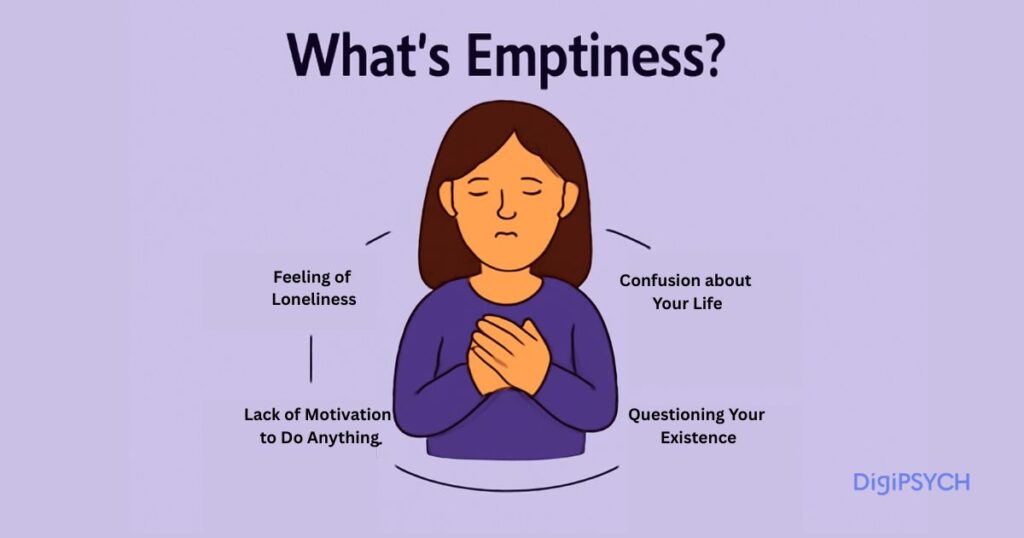
It’s the feeling of loneliness, confusion about your life, your purpose, questioning your existence, and a lack of motivation to do anything.
You constantly feel a void in your heart, an emptiness that keeps on questioning and hurting!
This experience could have many causes. Experts divide it into the following categories:
- Physical causes of feeling empty inside.
- Mental and emotional causes of Emptiness
Please note that these causes can help you understand and relate to your situation, but only an expert mental health professional can diagnose emptiness and provide solutions.
A Reddit User Great_Tales_Of_Old Case Study:
Do you go for walks in nature? Do you work out? Do you do anything that is physical, and not in your head? You cannot live if you are constantly thinking.
You can sit there and let it all out, cry if you need to, follow the sinking feeling to the very end. Turn off the internet, your phone, T.V, music, whatever nonsense entertainment you surround yourself with. Get a journal to write in, write down every single thing that makes you feel empty, every single thing wrong with your life, big or small. You know the reasons.
Physical causes of feeling empty inside:
Insufficient Sleep:
Sleep is the key to sound physical and mental health. Insufficient sleep leads to poor life quality, low energy, mood swings, and irritability.
A study by Harvard Medical School proves that:
“ A good night’s sleep improves mental and emotional resilience. On the other hand, chronic sleep deprivation leads to negative thinking and emotional vulnerability.”
So, the takeaway is, if you don’t sleep enough, your brain faces difficulty in dealing with daily challenges that end up feeling empty!
Exhaustion:
Insufficient sleep, overwork, and exhaustion can lead to emptiness, because both are out of the natural way the body works.
Our body craves balance, discipline, and rest. If we do injustice with any of this, it’ll show up!
If you’re studying in the morning, doing a part-time job, and a night time cooking and taking care of your parents at home, without even sparing an hour for yourself, chances are you’ll end up exhausted and lost.
Here’s a quick checklist to see if you feel exhausted:
- Am I overwhelmed with tasks?
- Is my job asking too much of me?
- Where have I overworked myself?
- Do I feel like escaping?
If any of these sounds like “yes”. Don’t worry. Because realization is the first step towards a cure. Acknowledge what’s wrong and take a step towards its correction with the help of an expert support, a friend, a caring family member, or an expert mental health psychologist.
Mental and Emotional Causes of Emptiness:
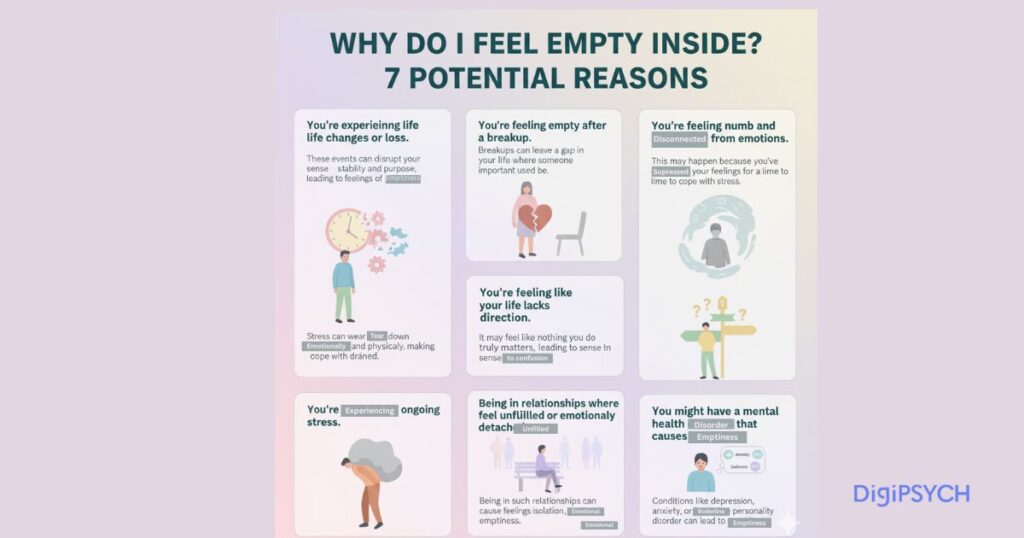
Unresolved Past Experience:
Sometimes, there are hidden scars inside us that we don’t treat; those untreated wounds or experiences create emptiness in the long run.
For example, a sense of loneliness that your parents didn’t give enough love to you in childhood.
When we don’t explore emotions that hurt or don’t deal with them, they become giants within us and manifest in other ways, such as emptiness.
The solution is, even if it hurts you, dump it. Discuss it with your trusted friend or a family member, or talk to a mental health expert and they’ll clinically help you to resolve hurt or traumatic experience.
Boredom:
Boredom is different from exhaustion. Exhaustion means you might be doing things that matter to you, but in an overwhelming way.
Boredom means that doing things with zero energy or doing things that don’t ignite the spark with you. It actually makes you feel like there is something missing, a void that can’t be filled.
No Self Awareness:
Life is busy, managing studies, friends, family, house chores, goals, socializing, and a lot more. Sometimes we’re giving attention to everyone but the one we forget is our own selves. We just keep on living without even understanding:
- Why am I even doing so?
- Am I happy?
- Is it what I was meant to do?
We’re just living for the sake of living with zero self-awareness. That’s what develops emptiness, hollowness or questioning one’s existence. Not having a purpose creates a question mark on your life.
No self-awareness is usually the result of following people blindly, being in a toxic relationship, or a demanding job that drains you enough that you have zero time for self-reflection.
Not having Caring Relationships
Relationships are the most beautiful blessing in life. Today, individualism is on the rise. Social media has connected the world while isolating the close ones. And that’s a leading cause of emptiness.
A study by the Harvard Study of Adult Development shows that:
“Maintaining good and close relationships is the most important aspect of the human experience.”
Emotional intimacy, love, support, active listening, and quality time with your loved ones are important. When these are missing in someone’s life, it could naturally lead to the feeling of emptiness.
Any Mental Health Condition:
What just seems like emptiness might be a representation of any underlying mental health condition, such as depression or PTSD.
Sometimes, depression shows up as temporary sadness, low energy, loss of interest, and you might end up daily, “I’m tired, I’ll see it tomorrow.”
A sense of nothingness that doesn’t go away is usually linked with PTSD or chronic depression.
With depression, people also feel a change in appetite, fatigue, low self-esteem, feelings of emptiness, trouble with decision-making, and thoughts of ending life.
What’s the difference between Emptiness and Depression?
Don’t confuse depression with emptiness. Depression is a mental health condition with many clear symptoms such as:,
- A persistent sad feeling.
- No hope from life
- Sleep too much or no sleep at all.
- Zero focus.
- Developing self-hatred or complete self-obsession.
- Not enjoying daily activities you once loved to do.
- Feeling guilty or regret every time
Though emptiness can be a sign of depression but it’s way milder, and the best part is it’s positive, if caught early.
Because emptiness means your inner self is questioning why, it needs awareness; it wants you to know who you are, what you have done, and what you need to do.
It’s not always bad, and honestly, it can be a blessing if you sort it out with the help of an expert, who can help you understand what your body and brain signals and what your soul demands.
In short, conquering emptiness means putting your mind, body, and soul on one track, and that’s actually peace!
If you’re struggling with persistent feelings of emptiness or depression, explore our depression care services to find the professional support you need.
What to do When You Feel Empty Inside? Solution
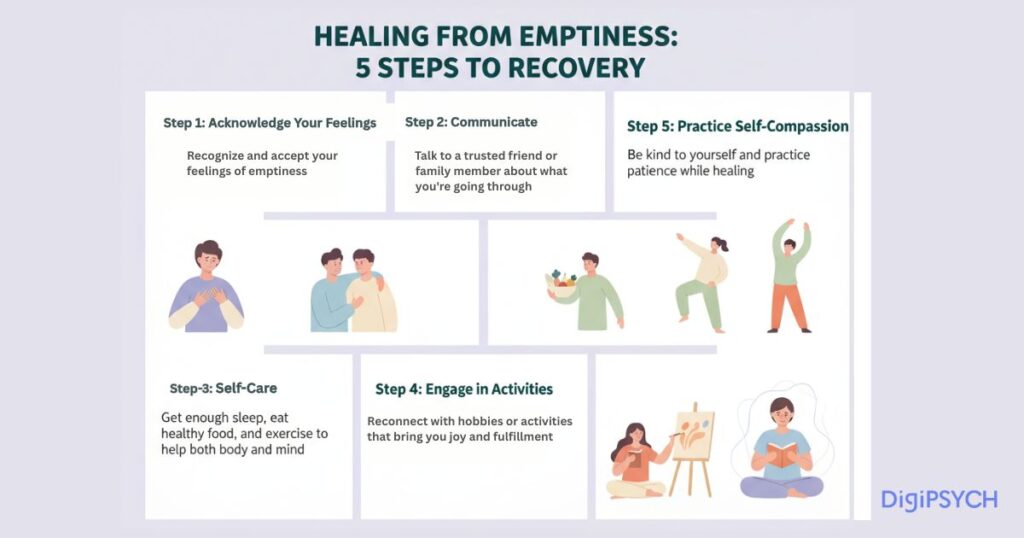
Once you understand that there is something inside you that needs to be answered, congrats, you’ve taken the first step towards a better you.
The first step you now need to take is to connect with a mental health professional no matter online or onsite.
Though YouTube gurus might share tips, a therapist will walk along with you and help you understand your feelings and uncover the cause of your hollowness, and then help you design a practical way out.
Because there’s no one-size-fits-all solution for everyone. You’re different; your problems, your emotions, your fears are different, and they need to be addressed accordingly.
Here are a few things you can do with yourself once you understand that you feel emptiness:
- Embrace yourself. Acknowledge your emptiness and be gentle with yourself. Don’t overthink, don’t regret, and allow yourself to accept it and prepare to seek support.
- Save time for yourself every day. Do what makes you happy. An extra prayer, a walk, a book read, spending time with your mom, or whatever it is. Value your happiness and spare time for it. You’ll see that your hollowness will adjust with time.
- Understand your feelings and know your triggers. Know which people, which places, which times make you feel empty. Understand your body and do self-exploration to overcome hollowness. The more you know yourself, the less you feel hollow.
- Connect with your loved ones, friends, and family. Because no matter how empty we feel, staying together with our loved ones makes us feel good and gives a meaning to our life.
- Do self-care! Your body speaks; listen to it. Eat good, sleep well, drink well. Take care of your emotions. Do journaling, art, or anything that makes you feel good.
- Last but not least, appreciate yourself. Have some self-empathy, tap your back, and appreciate how far you have come.
Takeaway:
Emptiness is real. It’s natural. It could be physical, mental, or emotional. Sometimes, it’s temporary and resolves on its own. Other times, it can last longer, especially when it has deep roots. In this case, you usually need mental health support.
A mental health professional can help you understand the root cause of emptiness and design a practical way to beat it, and help you understand what your soul needs.
At Digipsych, we provide telepsychiatry Mental Health Services across six states in the USA.
Just fill out the consultation form, and our team will contact you and arrange your session with our mental health expert, Dr Hussain, a certified child and adolescent psychiatrist with years of experience. In the online meeting, he’ll listen to you, help you understand the cause of your emptiness, and design a practical way out of how you can deal with it. Stop fighting it alone. We’re here to help.
Don’t consider emptiness as a problem. Let it help you in understanding yourself better rather than draining you out.
In case of any queries, you can contact us.
FAQs: Why you Feel Empty?
What does it mean when I feel empty inside?
Feeling empty inside can mean a sense of emotional void or lack of purpose. It’s often linked to feelings of loneliness, confusion, or loss, and can result from various emotional, mental, or physical causes. This feeling may be temporary or persistent depending on its root cause.
How is emotional emptiness different from depression or anxiety?
While emotional emptiness shares symptoms with conditions like depression or anxiety (e.g., sadness, lack of motivation), it differs in that it’s more about a sense of emptiness or disconnection rather than pervasive sadness or worry. Understanding the nuances can help in deciding when professional help is needed.
What are the common emotional causes of feeling empty?
Psychological factors like unresolved grief, emotional trauma, a lack of self-awareness, and feeling disconnected from others often contribute to feelings of emptiness. Understanding the root cause of these emotions can guide how to heal and move forward.
How does a lack of sleep or exhaustion lead to feelings of emptiness?
Physical factors such as chronic exhaustion, insufficient sleep, or poor physical health can negatively affect your mental health. When the body isn’t well-rested, it becomes harder to cope with emotional challenges, often leading to a sense of emptiness or emotional numbness.
What steps can I take to overcome feelings of emptiness?
Start by acknowledging your feelings, engaging in self-care, talking to a trusted friend, and reconnecting with activities you once enjoyed. Taking small steps to nurture your body and mind can help you regain a sense of purpose and fulfillment.
When should I seek professional help for feelings of emptiness?
If the feeling of emptiness persists, or if it’s coupled with other symptoms like depression, anxiety, or suicidal thoughts, it’s important to seek support from a mental health professional. Early intervention can help you understand the underlying causes and develop effective coping strategies.